
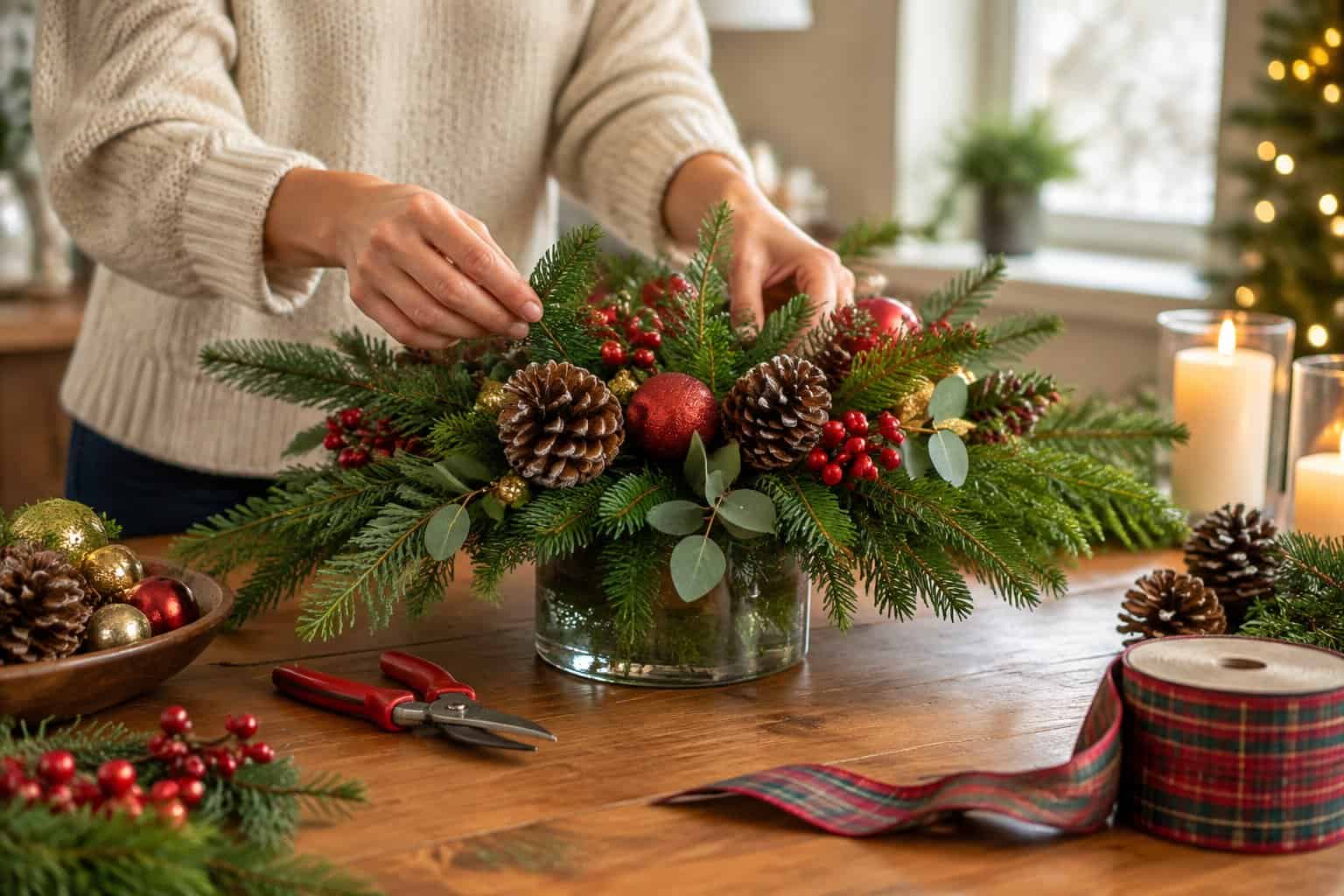
Layer evergreen stems on a low tray, add a flameless candle, and tuck in pinecones or ornaments for a simple Christmas table centerpiece.
As an Amazon Associate, I earn from qualifying purchases.
Table of Contents
What Do You Need for a Christmas Centerpiece?
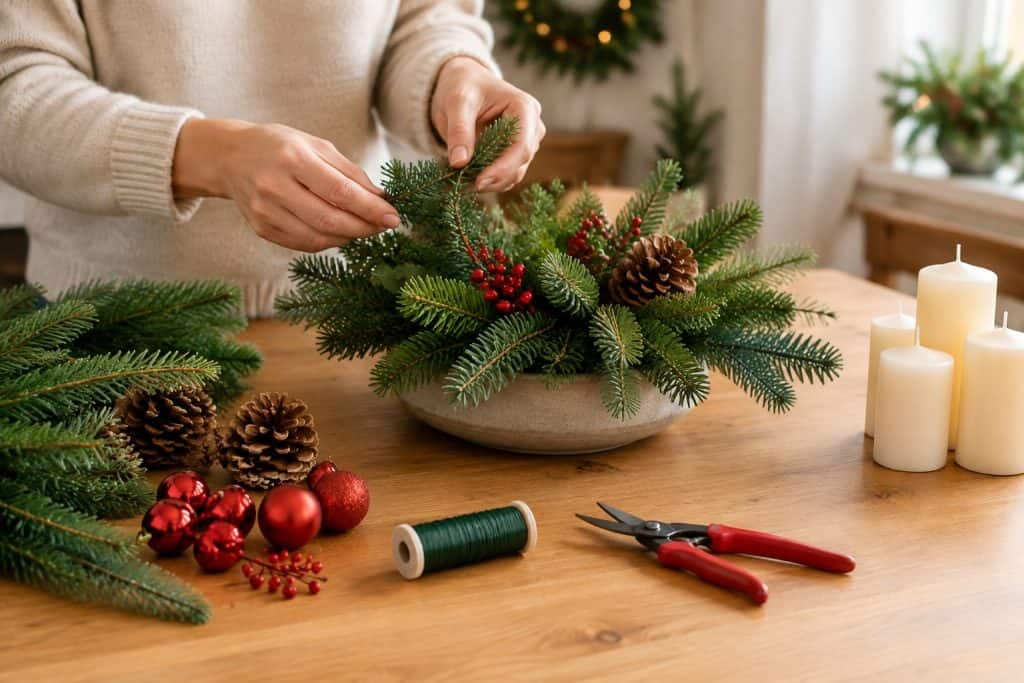
You need four core items: a base, a mix of evergreen cuttings, pruning shears, and at least one candle or focal object. Everything else, from ribbon to floral foam, depends on how long you want the arrangement to last and how polished you want it to look.
Choose a Base That Fits Your Table
Match the base to the shape of your table. A round table calls for a round centerpiece, and a long rectangular table looks best with an arrangement that runs down its length.
For round designs, a plate or charger at least 13 inches across gives you enough room to layer greens without them sliding off the edge. For long tables, a table runner works as a base; burlap or buffalo plaid adds texture that shows through the branches.
If you plan to use fresh flowers or want your greenery to stay hydrated, pick a container that holds water:
- Watertight shallow tray: Fits two blocks of floral foam, good for medium tables
- Cookie tin or soup urn: Adds a vintage or rustic feel
- Wooden board or tray: Suits minimalist or rustic styles with loose pieces
- Cake stand or compote: Lifts small arrangements for round tables
Gather Greenery, Decorations, and Basic Tools
Collect at least two or three types of greenery so the arrangement has depth. Good choices include:
- Cedar, spruce, balsam, and white pine
- Holly (adds red berries naturally)
- Eucalyptus, boxwood, or magnolia leaves for contrast
- English ivy for trailing edges
For tools, have sturdy pruning shears ready, since some evergreen stems are tough. Wear gloves; pine needles and holly leaves are prickly. Floral wire, waterproof floral tape, and wood wired picks help you secure pinecones and ribbon.
If your yard has no evergreens, ask at a local Christmas tree lot. They often have fallen trimmings they’ll hand over for free.
Decide Between Fresh and Faux Materials
Use faux greenery for a display you can assemble ahead and reuse. Fresh stems need a watertight container and regular water checks; how long they last depends on the species and room conditions.
Build Your Centerpiece Step by Step
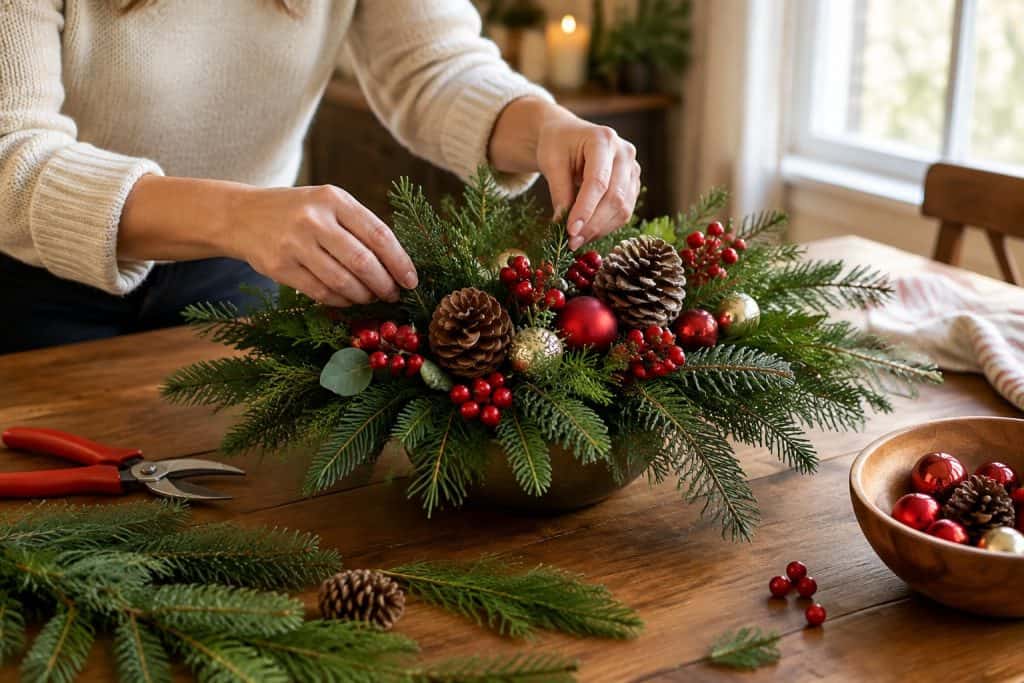
Start at the ends of the arrangement with longer greens, set your focal point in the center, and work inward with shorter pieces until the base disappears. Then walk around the table and fix any thin spots.
Secure the Base and Arrange the Greenery
If you’re using floral foam, soak it until it sinks on its own, then set it in your container and run two strips of waterproof floral tape across the top to lock it in place. Skip this if you’re laying greens on a plate or runner; the weight of the branches holds them.
Cut your longest pieces first, around 8 to 12 inches, and place them at the ends to establish the outline. Angle them slightly downward so they drape over the edge of the container.
Keep adding cedar or pine around the base until the container is hidden. Alternate textures as you go: a flat cedar frond next to a fluffy pine tip gives more visual depth than two identical pieces side by side.
Add a Focal Point

These 4-inch-wide LED pillars provide a focal point without an open flame beside the greenery.
View on Amazon (paid link) →Place a flameless pillar candle on a dry, stable holder in the center. Keep it separate from wet foam or water used for fresh greenery.
A small reindeer figurine, miniature tree, or vase of flowers can fill the same role. Set it securely before adding smaller accents.
Fill Gaps with Ornaments, Pinecones, or Fruit
Pinecones need wire to stay put in foam. Feed a piece of floral wire through the top few rows of scales, pull both ends into a U shape, and twist them together close to the cone. Push the twisted wire into the foam and bend it to angle the cone how you like.
Use the same wiring method for ornaments. Group decorative pieces in odd numbers (three or five) spaced evenly around the arrangement so the eye travels across the whole thing.
Fresh fruit adds color with no wiring. Pomegranates, clementines, and red apples can rest directly in the greenery. Stiff-stemmed flowers like carnations and roses push easily into foam; softer stems such as ranunculus tend to bend.
Check the Shape from Every Seat
Step back and view the centerpiece from each chair at the table. An arrangement built from one side almost always looks lopsided from the other.
Look for three things: bare foam peeking through, a flat side with no height variation, and decorations clustered in one area. Tuck in small cuttings to cover gaps, and rotate the container a quarter turn to check again. Ribbon loops and swallowtail tails on wood picks are useful for filling awkward holes at the last minute.
How Do You Keep It Practical for Dinner?
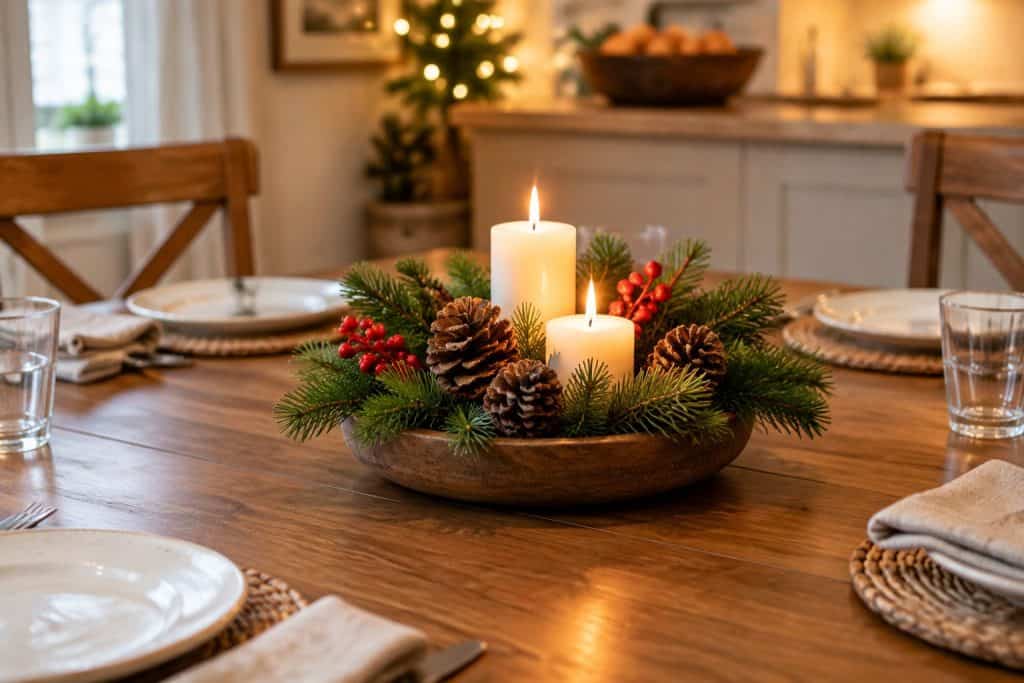
Sit down and check that the centerpiece leaves a clear view of the person opposite. Set out plates, glasses, and serving dishes before deciding how wide the greenery can spread.
Use flameless candles among the foliage. Keep decorative berries, greenery, and fruit away from food intended for eating and out of reach of children and pets.
How Do You Keep It Looking Fresh?
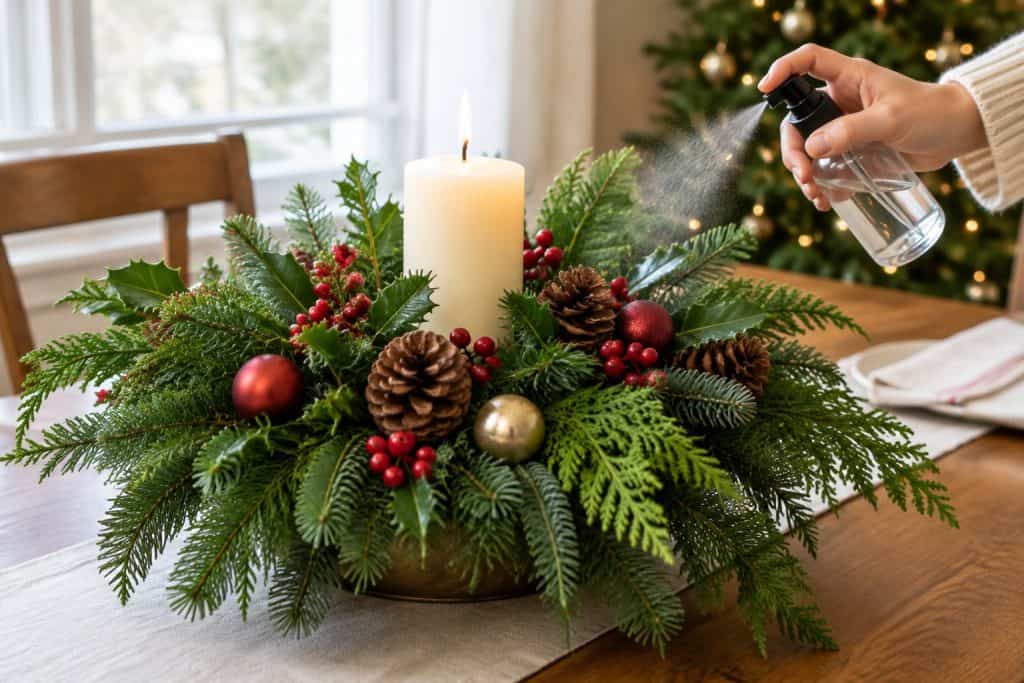
Check fresh stems daily and top up their water as needed without wetting electrical pieces. Remove spent foliage or flowers and keep the arrangement away from heaters.
After the holidays, discard the fresh material and pack dry, reusable pieces with padding. Remove batteries as directed before storing lights or candles.