
Your front door can mark Black History Month with a small display that gives neighbors something thoughtful to notice.
Before decorating, check your building’s rules for doors, nearby walls, and shared hallways, including restrictions on fire-rated doors.
Use a permitted attachment suited to the surface and total weight, and leave the door number, peephole, locks, hinges, closer, and full swing clear.
If nothing may be attached outside your apartment, use the inside face of the door or another permitted spot inside your entry instead.
Table of Contents
1. Red, Black, and Green Ribbon Wreath
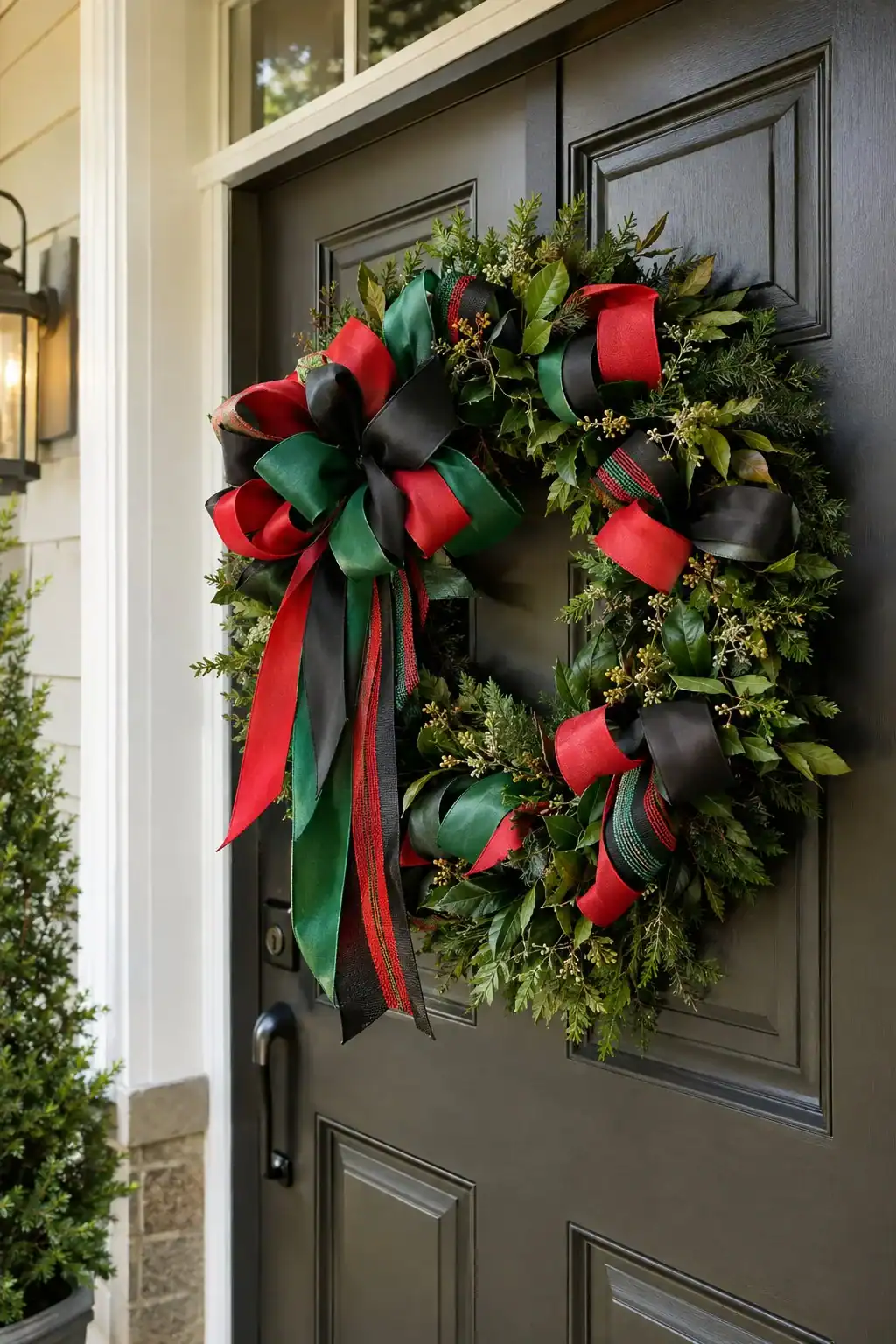
Ribbon loops in red, black, and green give a wreath a clear connection to the Pan-African flag’s colors without requiring a printed message.
Arrange wider plain ribbon around a lightweight ring, then add a few narrow printed ties as accents.
Choose a finished size that leaves your peephole and hardware visible, and use only a hanging method your building permits.

Printed Black History Month Craft Ribbon
These 3/8-inch printed ribbons work as narrow accent ties, alongside wider ribbon for the main loops.
View on Amazon (paid link) →2. Original Quilt-Inspired Paper Border
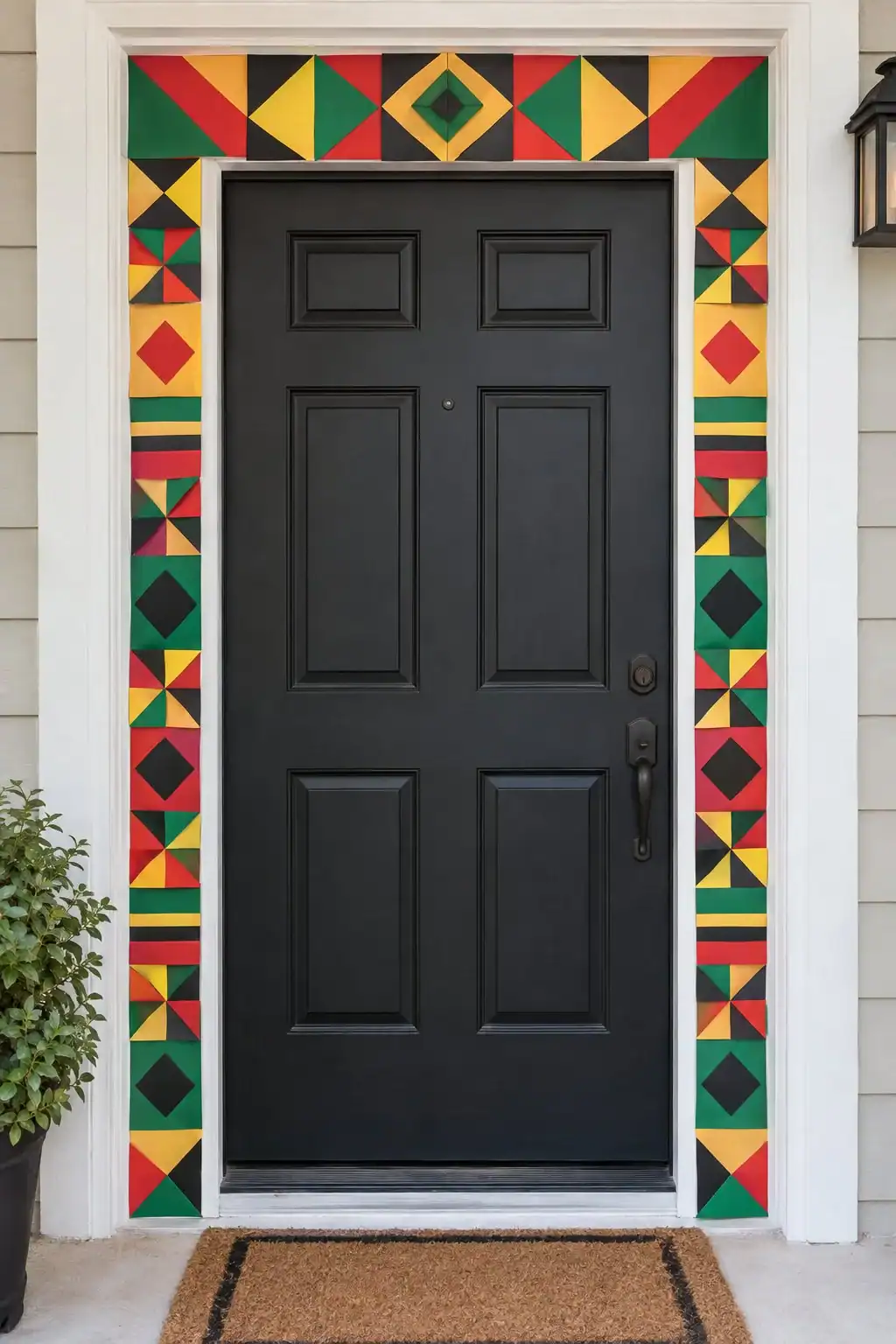
A border of triangles, strips, and squares gives your doorway the rhythm of a patchwork design.
Make an original arrangement from colored cardstock rather than copying a quilt or labeling an unrelated print as a specific cultural tradition.
Keep the pieces on a permitted surface outside the moving door edges, and test any approved adhesive as its maker directs.
3. Black Authors Reading Pocket
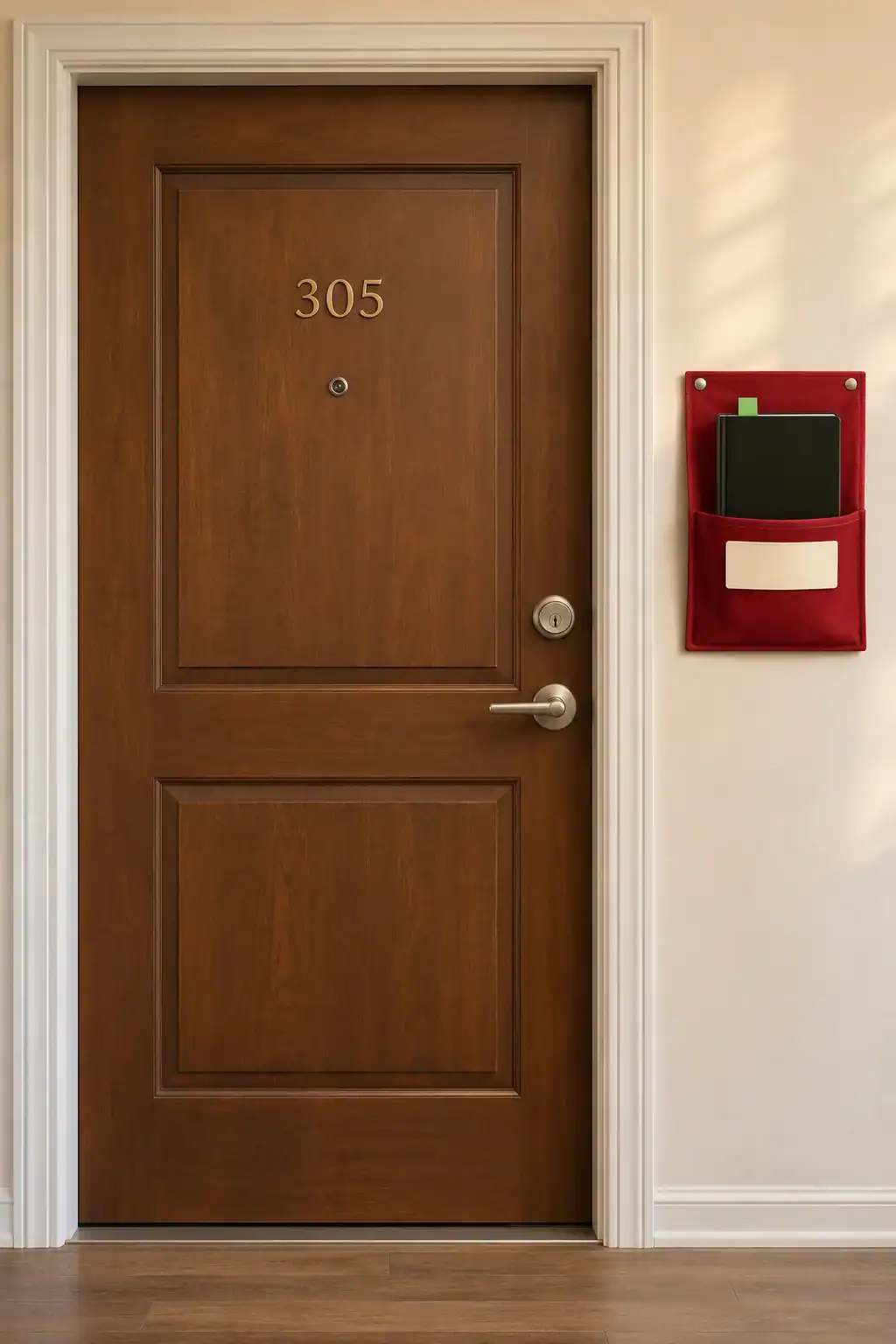
A slim pocket can hold a title recommendation by a Black author, with the book’s name and author on a small card.
Keep the book itself inside if the shared hall cannot accommodate borrowing, and put just the lightweight recommendation card in the pocket.
Use an original cover design or a book image you have permission to display, and change the recommendation through the month.
4. Commissioned Artwork From a Black Artist
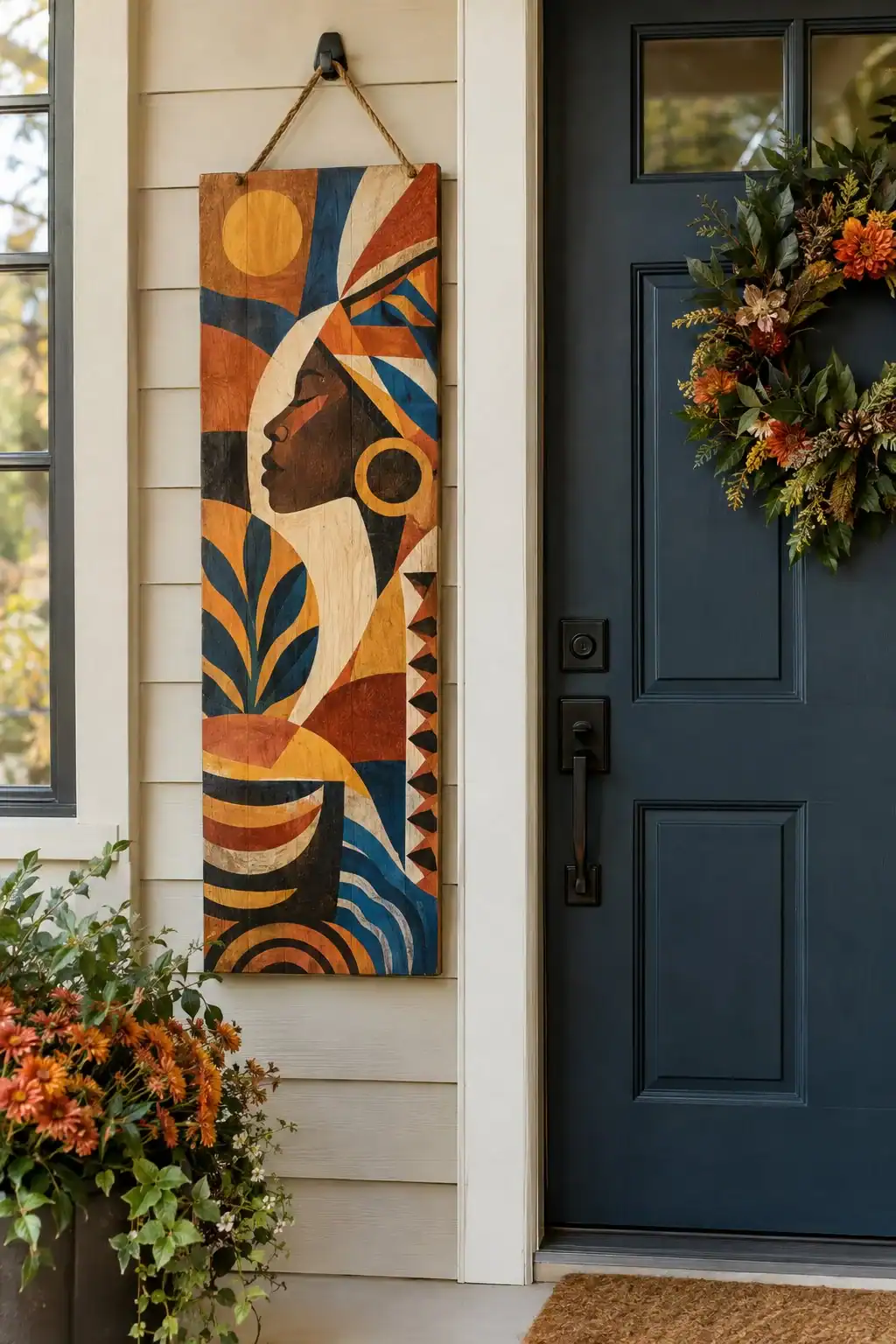
A small commissioned painting or illustrated welcome panel gives your entry an individual focal point.
Find a Black artist through their own portfolio or bio, agree on the design and display permission, and share the measurements of your permitted display area.
Ask for a lightweight format if a framed piece would be too heavy for the approved attachment.
5. Verified Local History Panel
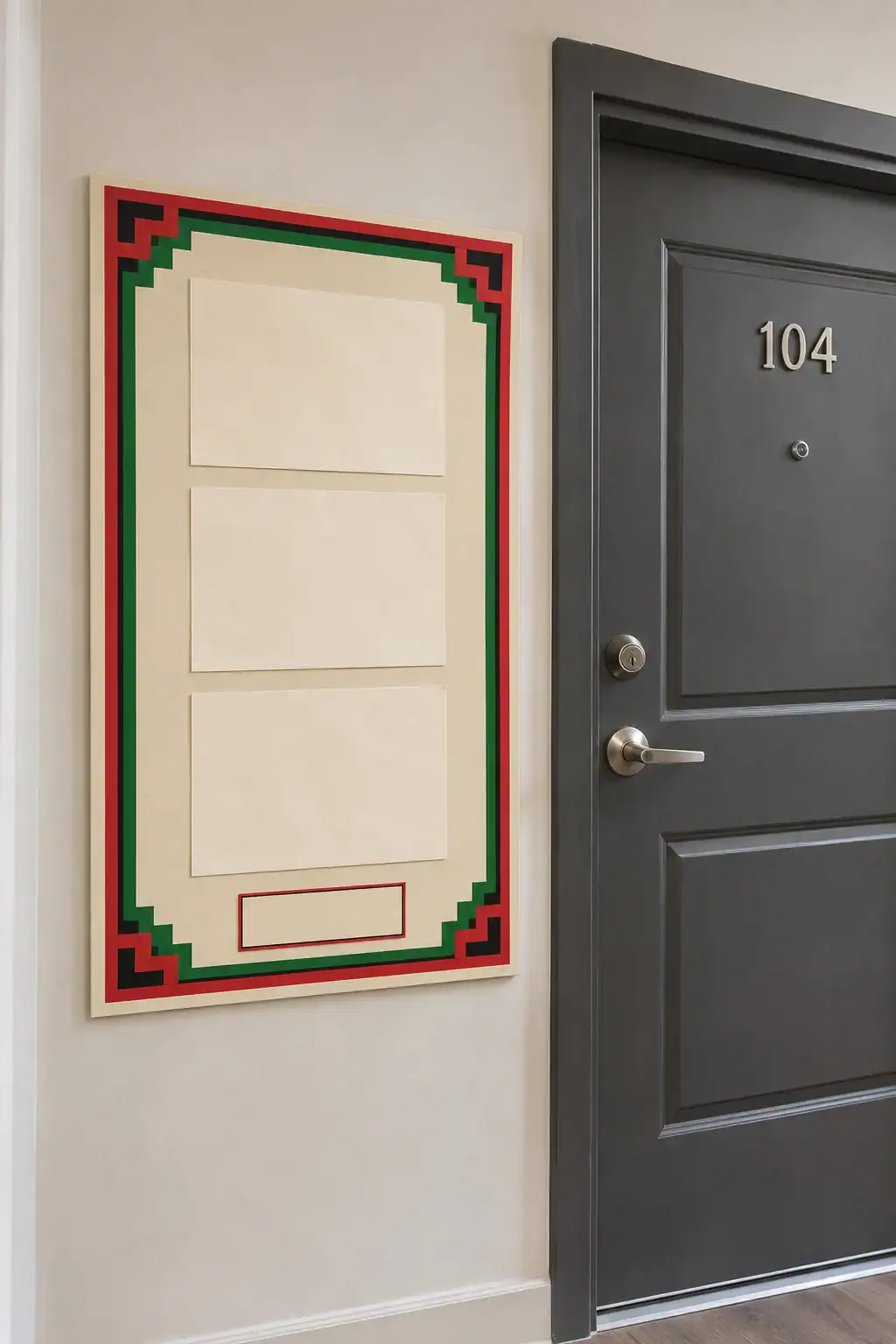
A compact panel about a local Black person, organization, or landmark makes the display specific to your community.
Use a short fact checked against a museum, library archive, or historical society, and include the source name and link beneath it.
Plain text and an original border are enough; you do not need an unverified photograph to make the story interesting.
6. Black History Month Greeting Banners
A pair of narrow banners gives a tall entry a strong vertical accent and a clear greeting.
Measure the full hanging space before buying, especially in a shared hallway where wall decoration may be restricted.
Keep the fabric out of the door’s swing and closing edge, and choose a smaller sign if the pair would crowd the entry.

Black History Month Door-Side Banners
Two 12-by-71-inch fabric banners suit a tall door-side display when your building permits the space.
View on Amazon (paid link) →7. Black Innovators Paper Icon Panel
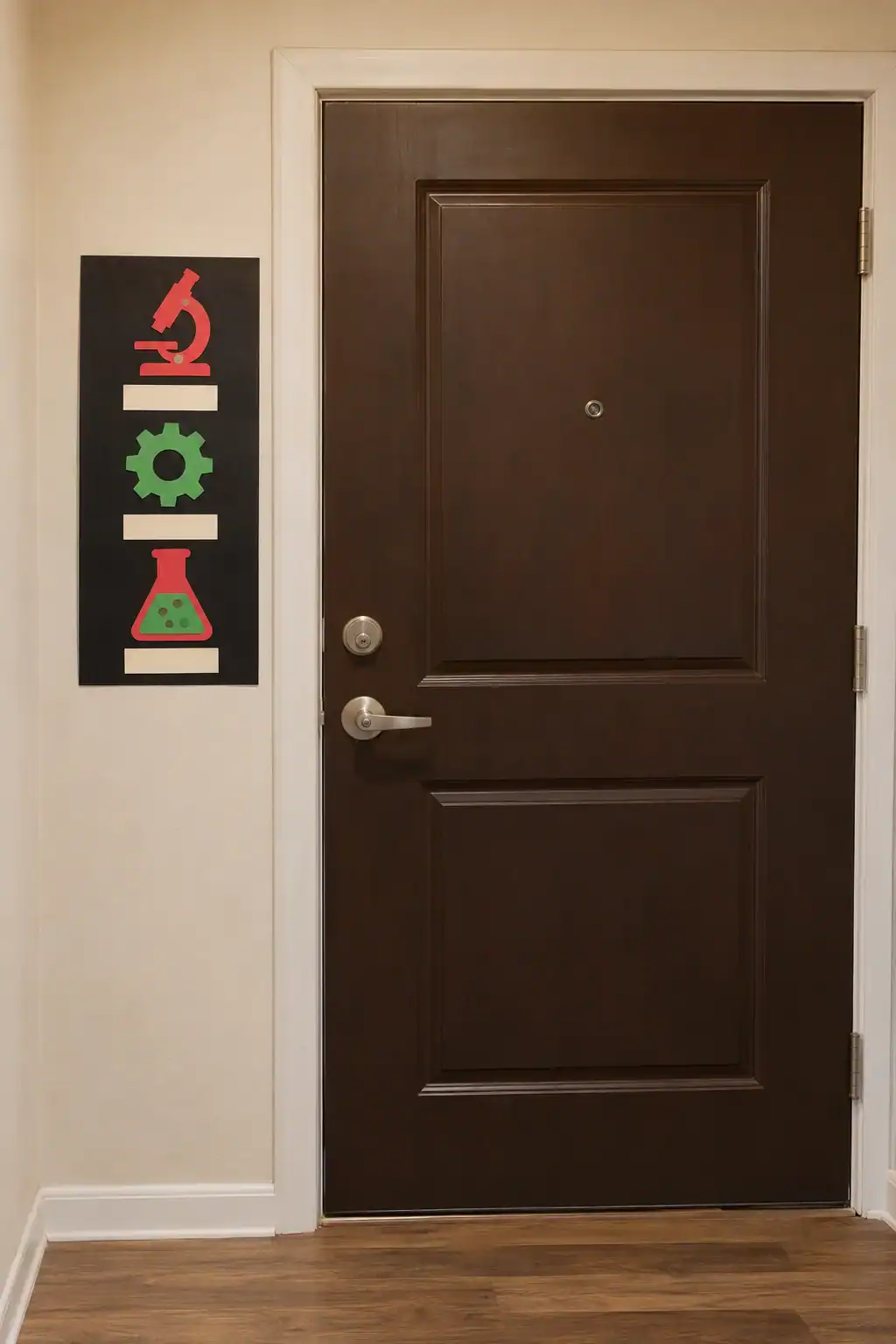
Simple science and engineering shapes make a graphic backdrop for a few carefully researched stories about Black innovators.
Pair each icon with the person’s name and their specific contribution, checked against a museum, university, or patent source.
Avoid broad shortcuts such as naming one person as the inventor of an entire technology when the history is more specific.
8. Neighborhood Black History Map
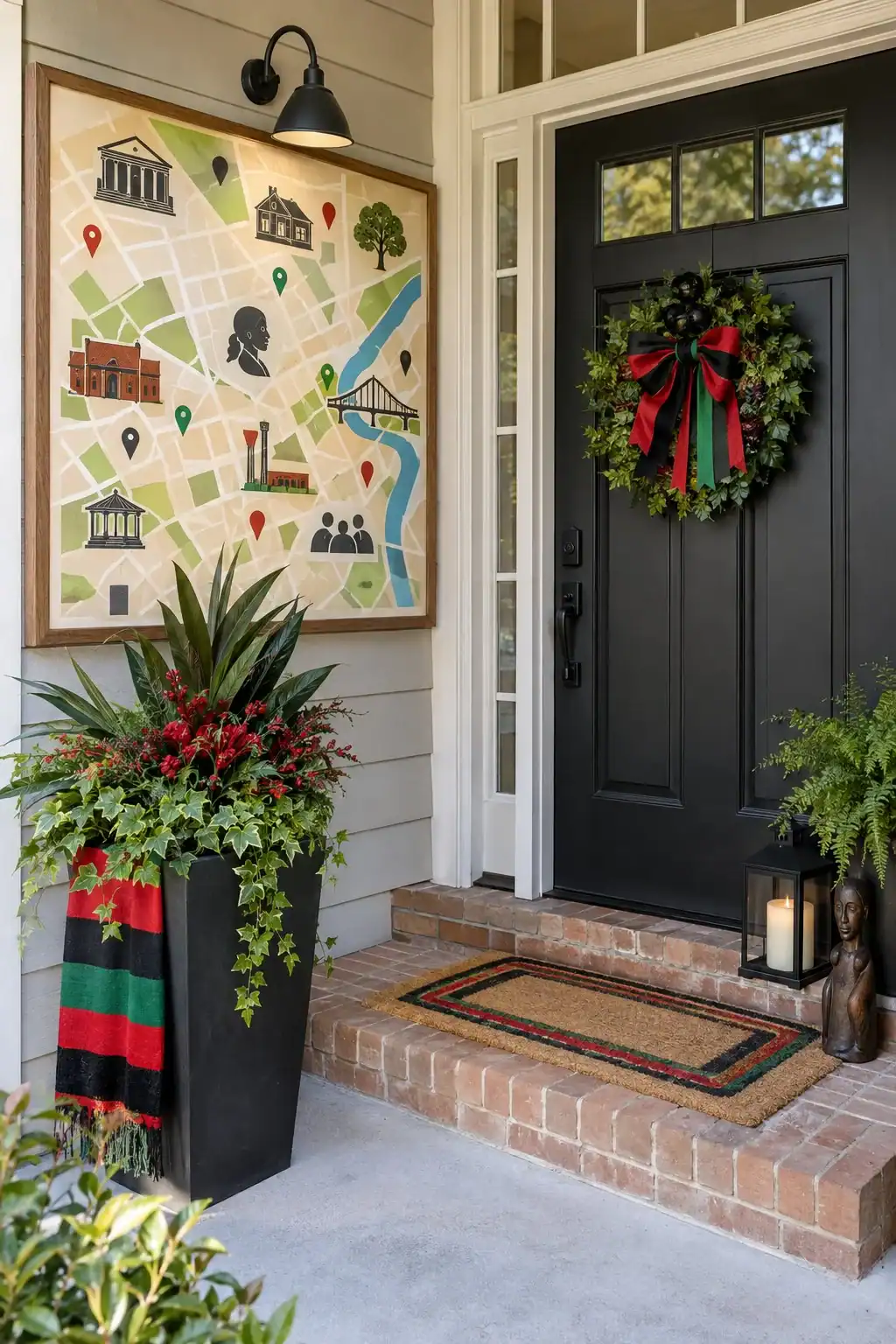
A small map can connect your display to nearby places with a documented Black history.
Mark two or three locations using your library’s local-history collection or an official historical-marker program, and add a brief source note for each.
Keep the map flat and modestly sized so it can be read without encouraging a crowd in a narrow hallway.
9. Original Jazz Instrument Paper Arrangement
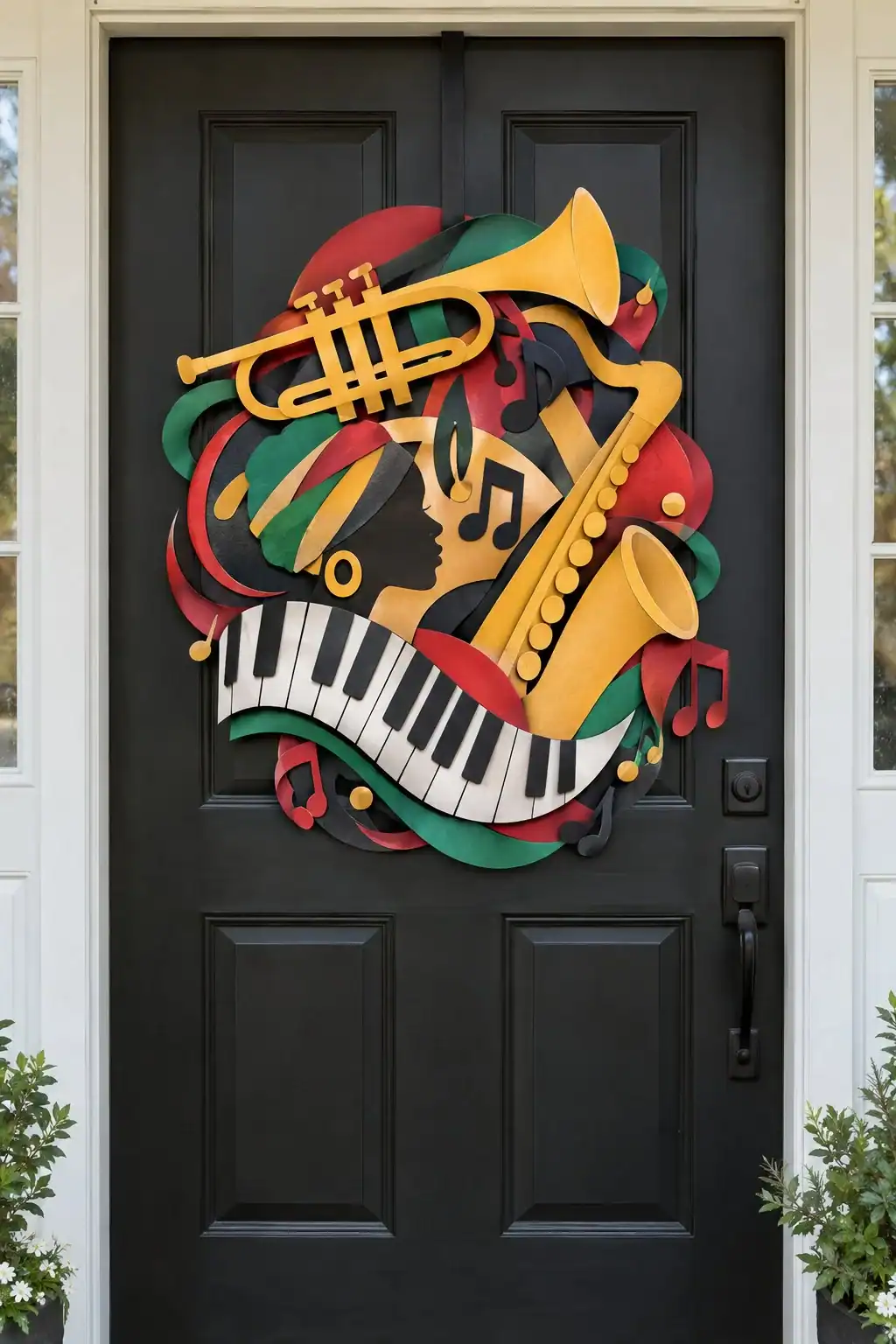
A paper saxophone, trumpet, and keyboard make an energetic arrangement for an entry with little room for a large wreath.
Draw your own simplified shapes, then add a small caption linking the design to a verified Black musician or local jazz story.
Use original drawings or permitted material instead of copying an album cover, and keep the paper clear of the handle and peephole.
10. ASALH Annual Theme Letter Board
A changeable board lets you build the display around the annual Black history theme published by ASALH.
Check the theme for the year you are decorating, then lay out its full title before attaching the board so you can check character supply and readability.
Use a larger paper panel if the wording feels cramped, and follow the same building and weight restrictions as any other display.

Veskaoty 10-Inch Felt Letter Board
The 10-inch board includes 294 characters, so lay out the full wording before choosing your display.
View on Amazon (paid link) →11. Permission-Based Family History Frame
One family photograph with a short, accurate caption can be more personal than a large collection of decorative images.
Ask everyone concerned whether they are comfortable with the picture and story being visible, especially in a shared hall.
Use a lightweight frame only where its weight and attachment are permitted; otherwise display a paper copy inside your apartment’s entry.

LaVie Home 8-by-10-Inch Frame
The 8-by-10-inch frame uses a clear plexiglass front for a small permission-based photo display.
View on Amazon (paid link) →12. Black Changemakers Name-Card Wreath
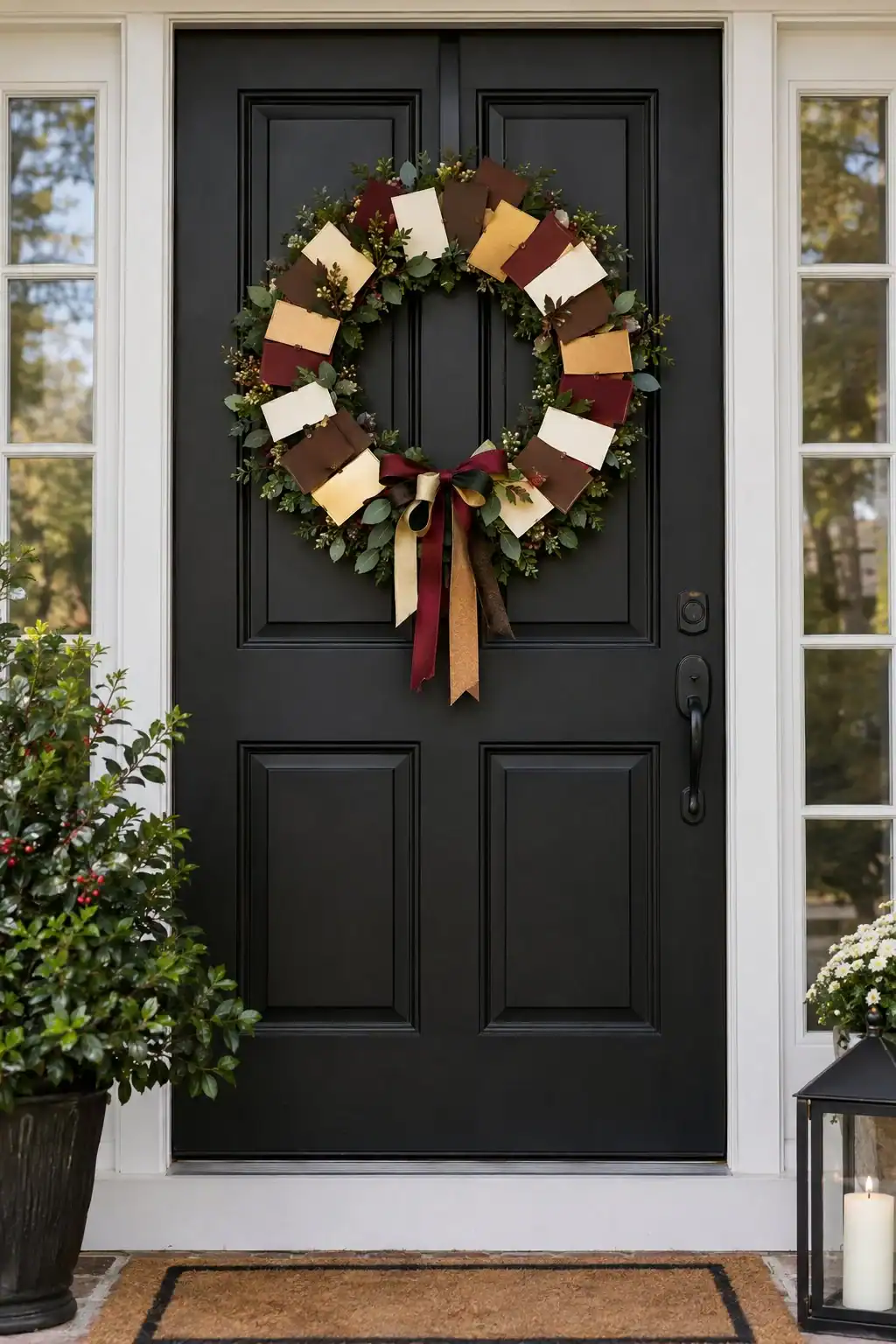
Small name cards arranged in a ring turn a familiar wreath shape into a starting point for learning.
Choose a few Black changemakers from history or your community, verify each name, and add a short source-linked note about why you chose them.
Keep the cards large enough to read and leave the ring light rather than filling every gap with extra decorations.
13. Layered Fabric Hoop With Original Stitchwork
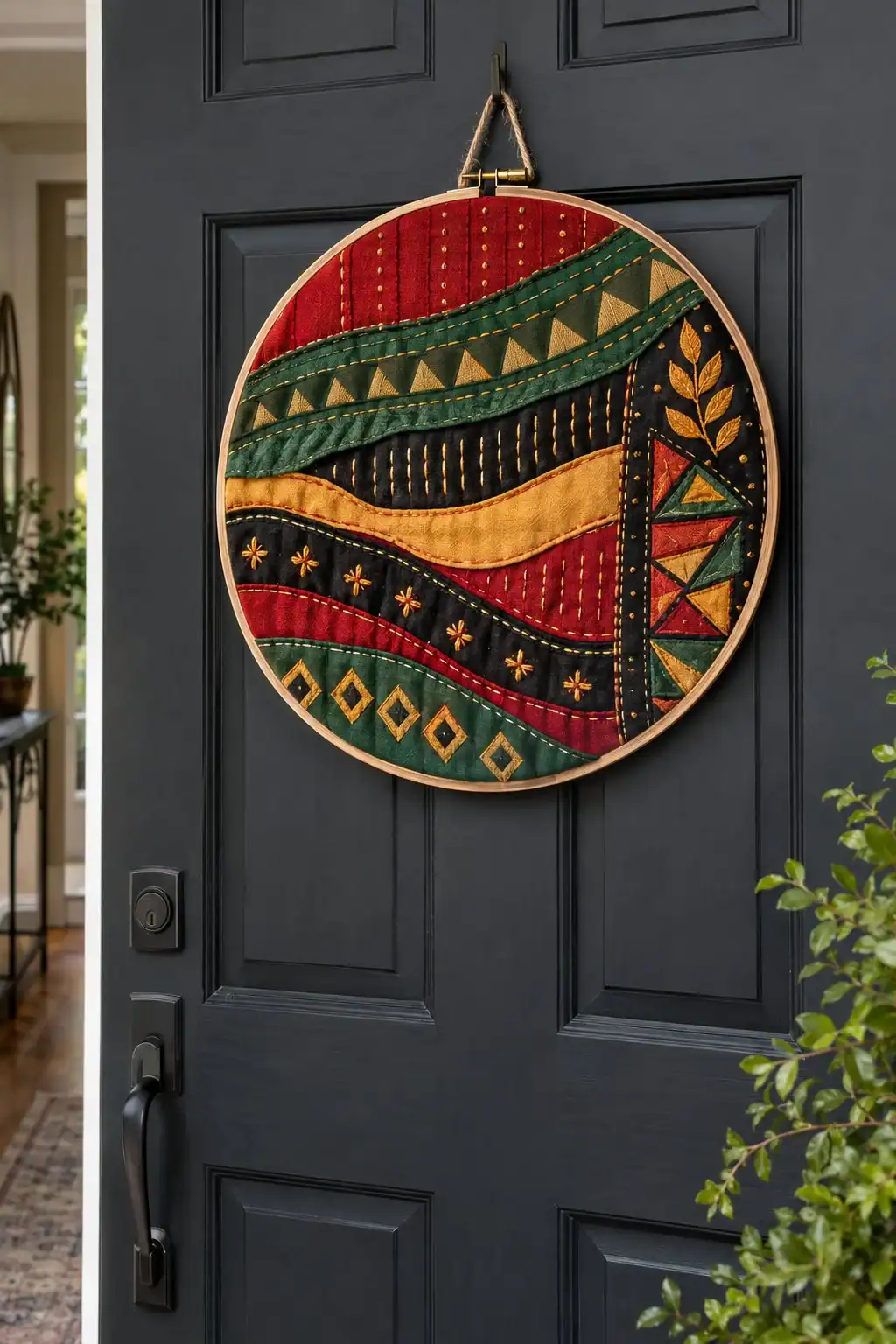
An embroidery hoop gives fabric, ribbon, and simple stitching a tidy round outline.
Layer colors you enjoy and make your own shapes, adding a small Black History Month tag if you want the purpose stated directly.
Trim loose fabric and keep the finished hoop light enough for the permitted hanging method.

Caydo 12-Inch Bamboo Embroidery Hoops
The pack contains three 12-inch bamboo hoops with adjustable screws for holding your fabric display.
View on Amazon (paid link) →14. Historically Black College Paper Pennants
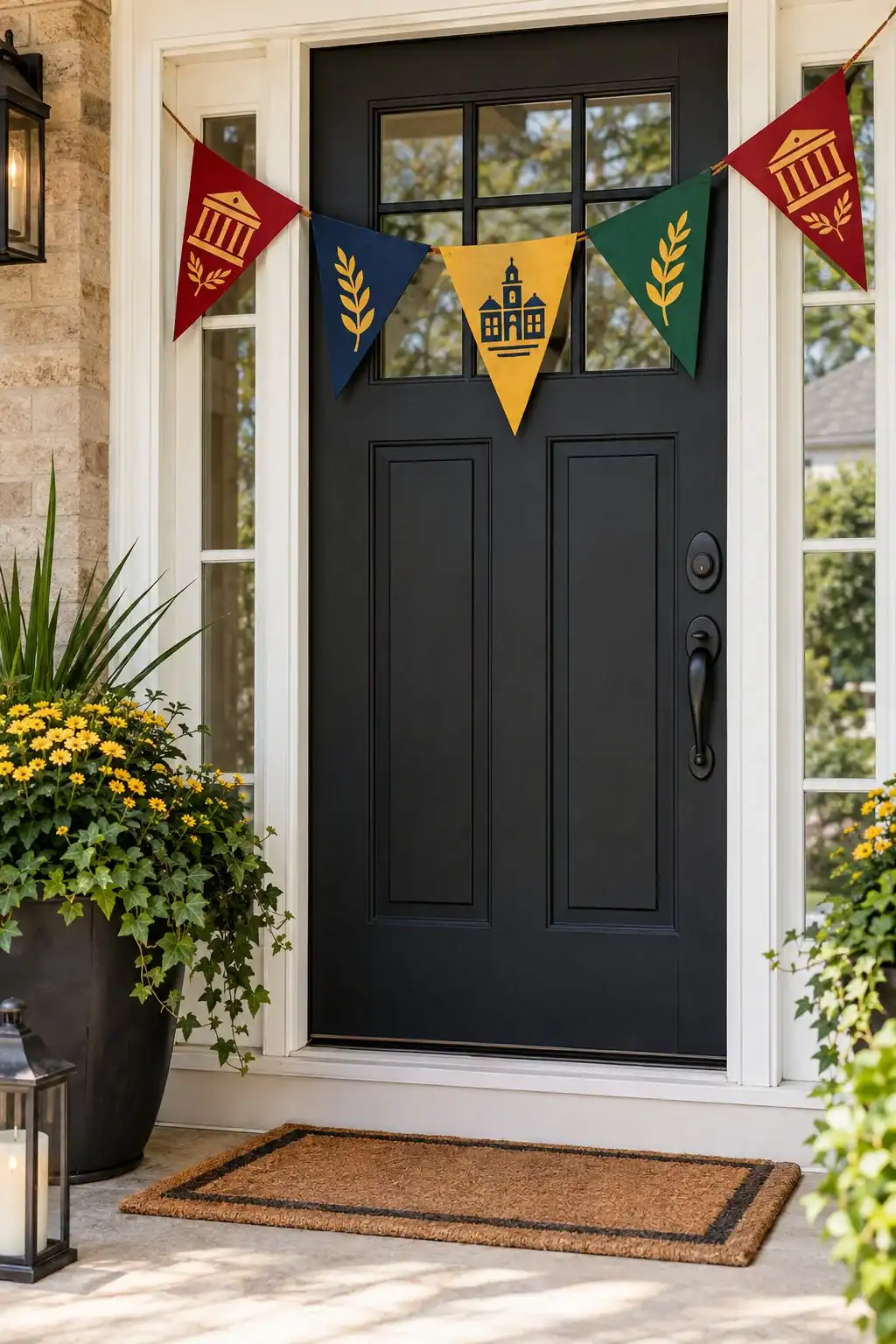
A short row of pennants can highlight historically Black colleges and universities that matter to you or your family.
Check each school’s full name and location on its own website, then use original lettering instead of assuming you may reproduce its crest.
Keep the pennants flat on a permitted panel or wall area rather than running string across the doorway or closer.
15. Black History Landmarks Paper Skyline
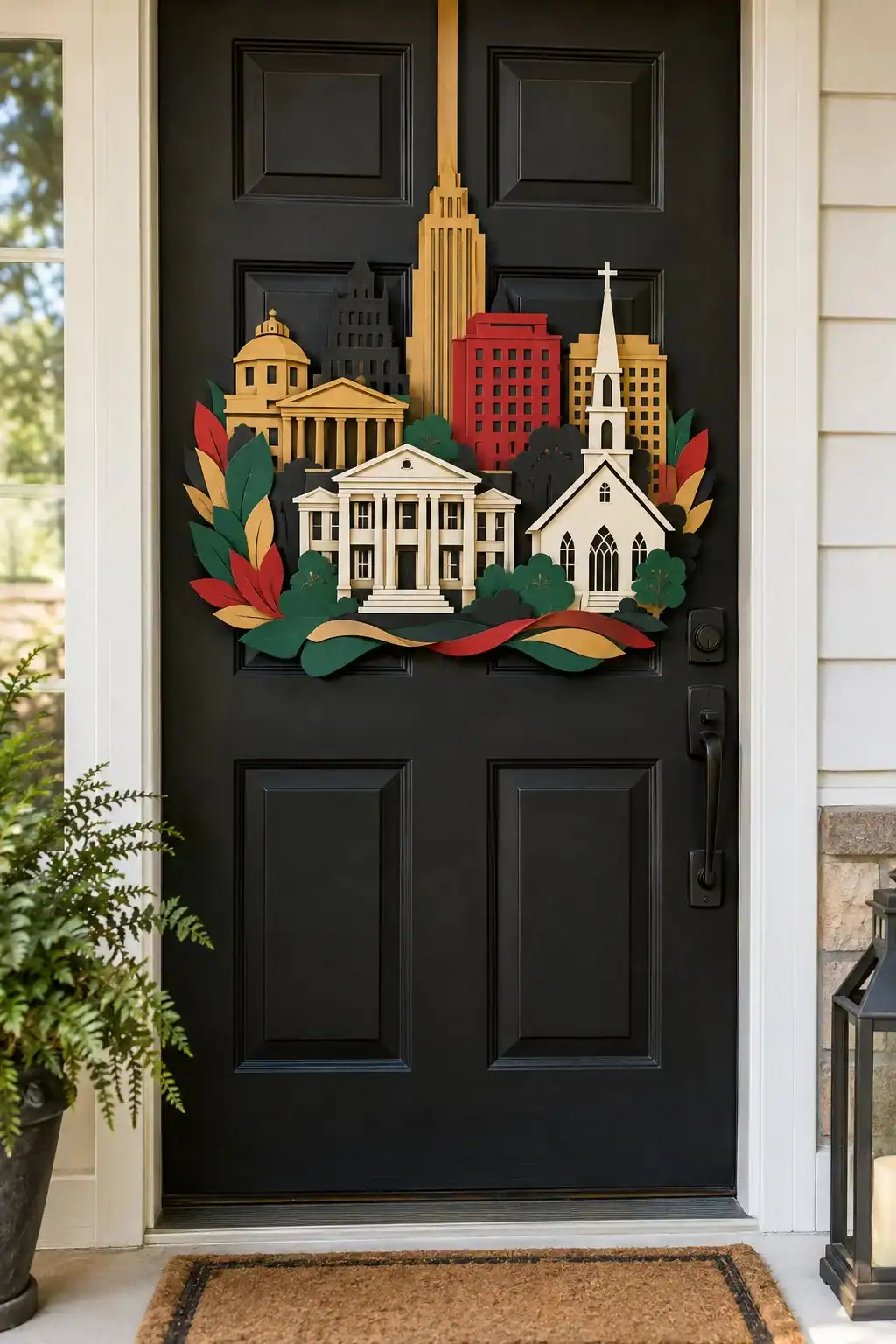
A group of paper building silhouettes gives a plain door a strong graphic center.
Choose actual landmarks connected to Black history, check their stories with their museum or official site, and label your own simplified drawings accurately.
A lighter backing makes black silhouettes easy to see without covering the whole door.
16. Black Theater Tribute With a Paper Stage
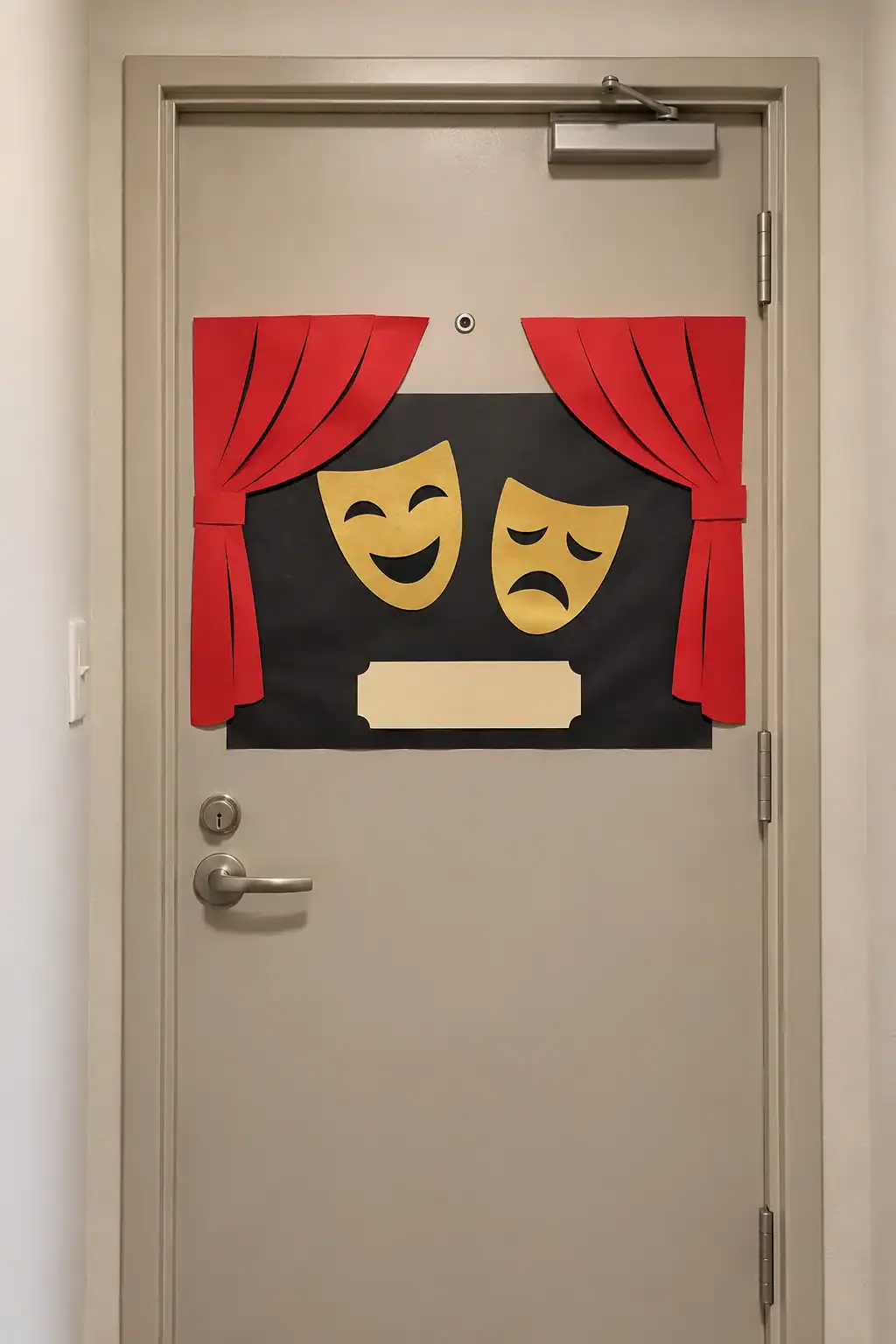
A flat paper stage with curtain shapes and theater masks gives the display a playful frame.
Add a short caption about a Black theater company, playwright, or local performance history, checked against that organization or an archive.
Use paper rather than hanging fabric drapes, keeping the frame, closer, and all moving door parts clear.
17. Black Athletes Tribute With a Track Motif
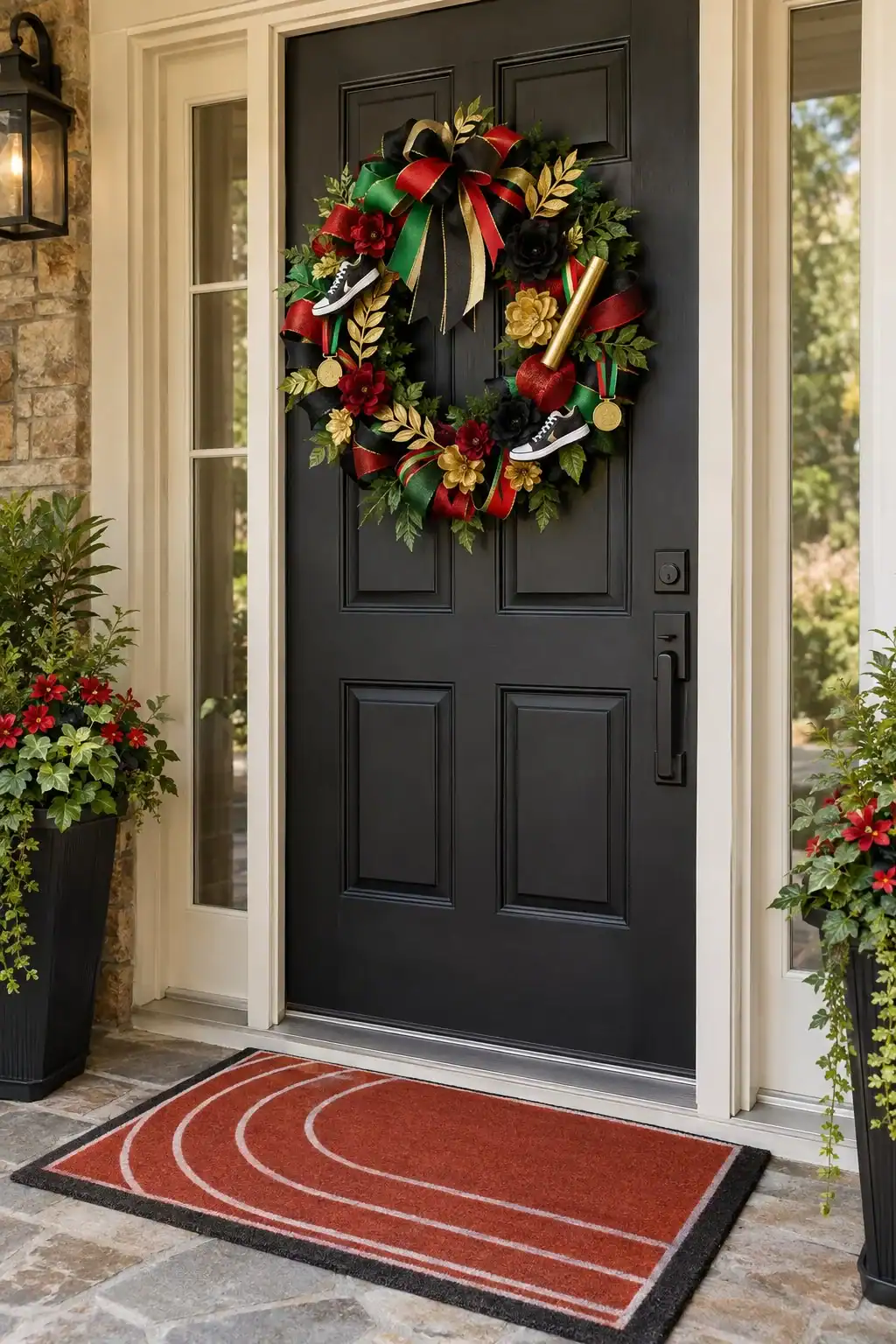
A running-track pattern makes an active, graphic accent for a tribute to Black athletes.
Pair it with one small card naming an athlete and a verified achievement, using the athlete’s official biography or a sporting organization as your source.
If you use a track-pattern mat like the illustration, first confirm that mats are allowed and choose one that lies flat outside the door’s swing; a flat paper panel is another option.
18. Black Botanical Pioneers Leaf Display
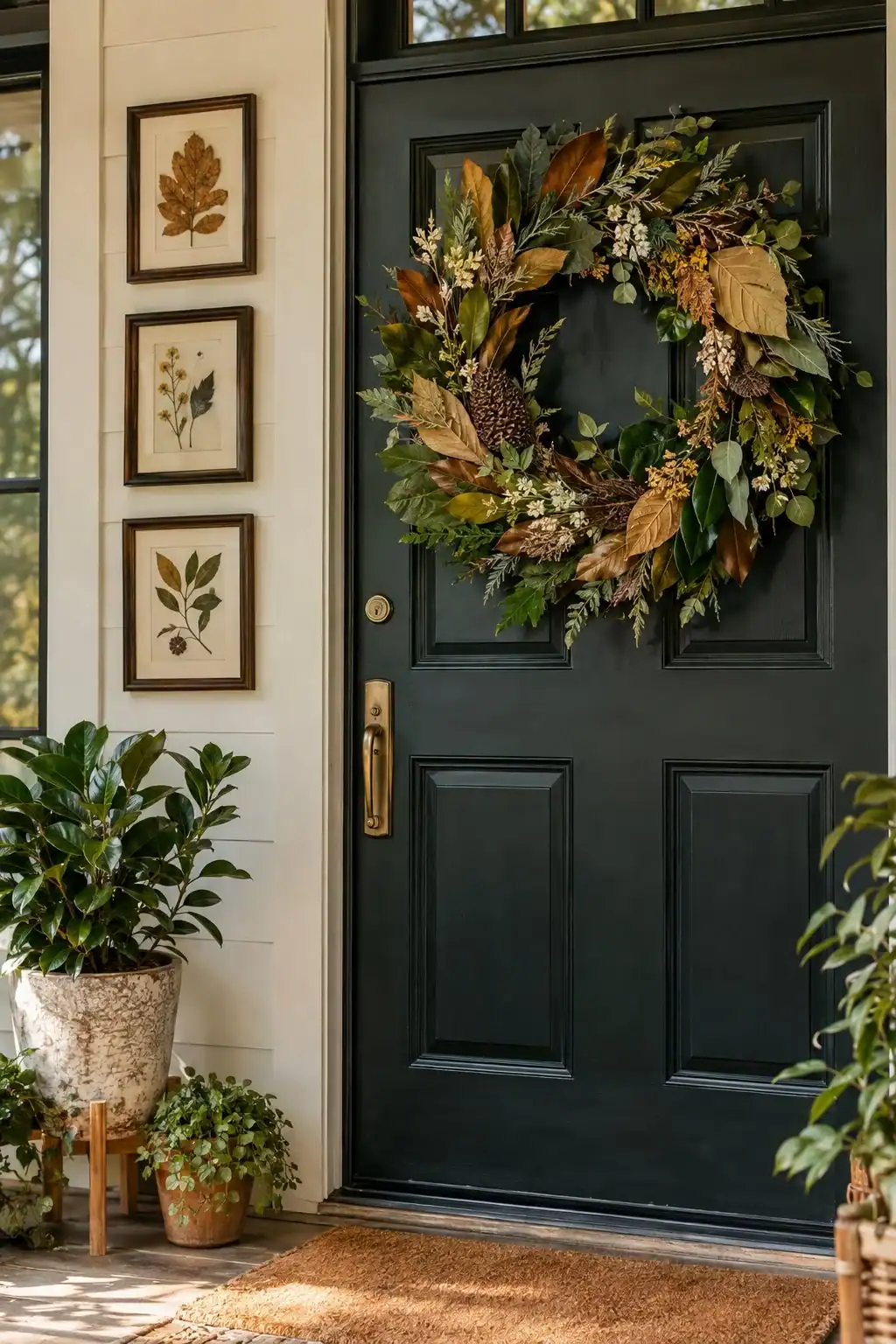
Pressed leaves or simple botanical shapes give an entry a quieter, natural look.
Connect the display to a Black botanist or agricultural scientist with a short note checked against a university, museum, or archive.
Use a lightweight backing and keep dried material away from lamps or other heat sources.
19. Licensed Poem Broadside by a Black Poet
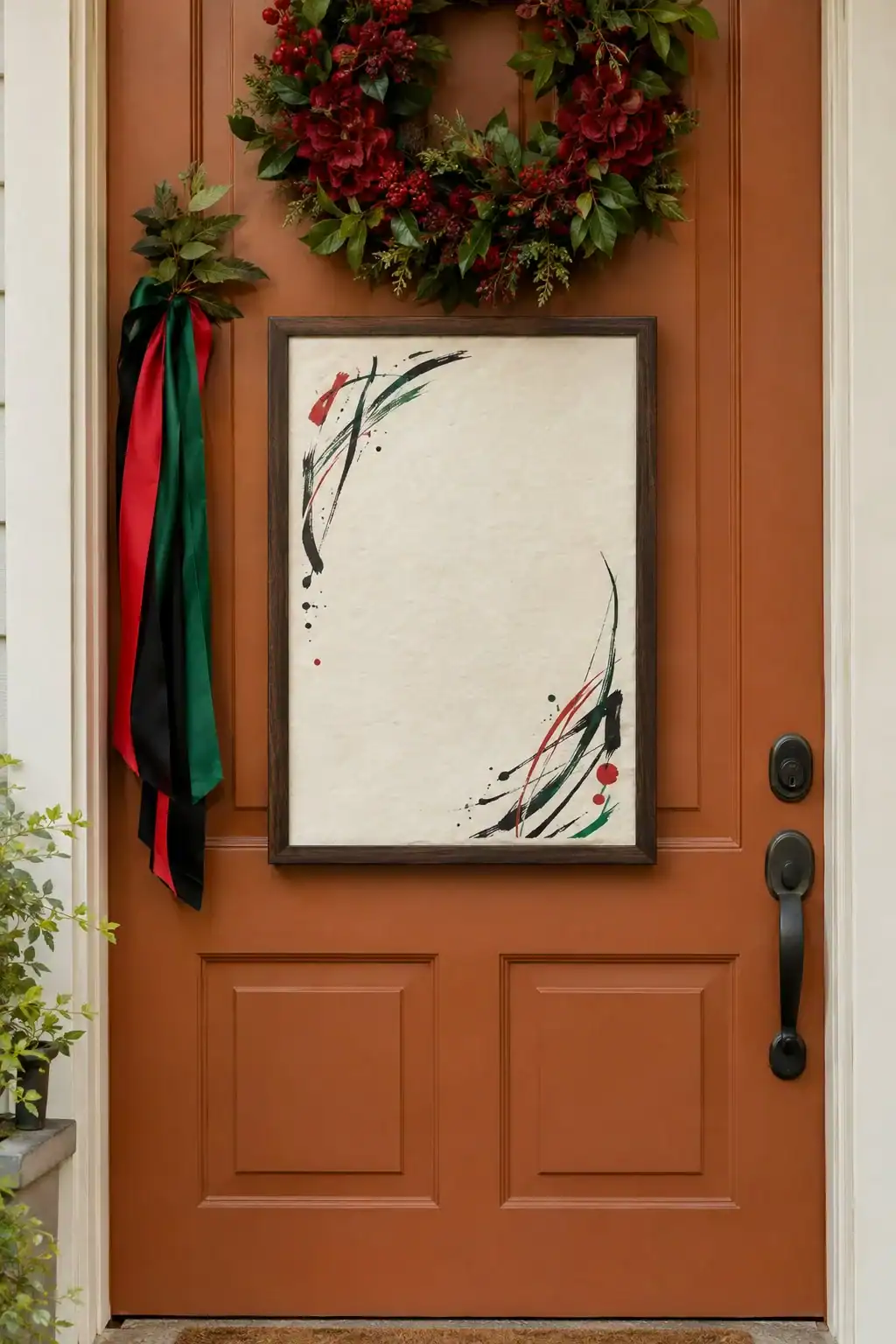
A short poem printed as a broadside brings a literary focus to your entry.
Commission a piece from a Black poet or choose text with clear reprint permission, and include the poet’s name and the agreed credit.
Keep the layout uncluttered and readable, using a lightweight paper display if a frame is not permitted.
20. Community Appreciation Envelope Grid
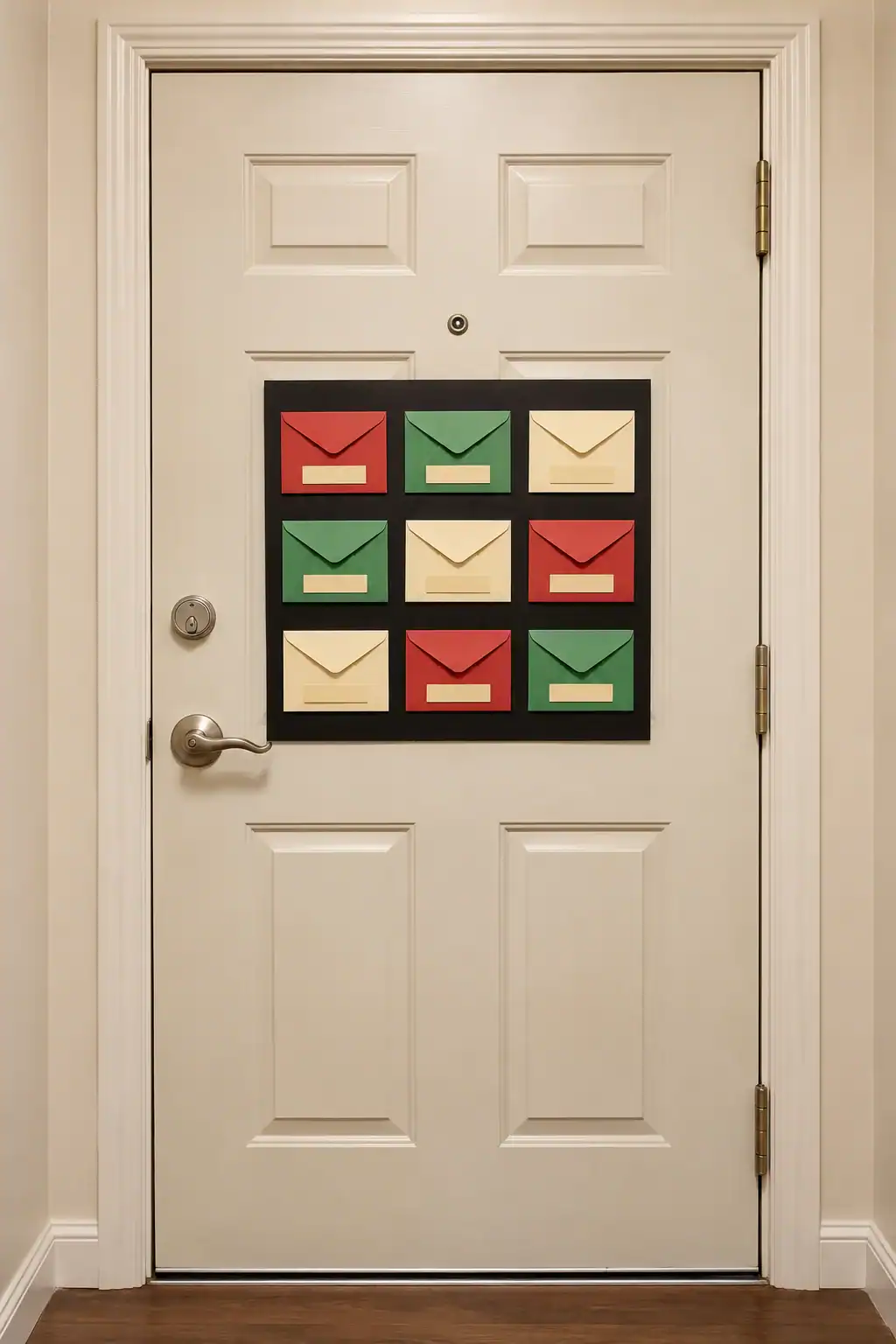
A neat grid of small envelopes gives you a way to collect notes about Black organizations, neighbors, or community work you appreciate.
Write a brief, checked description on each front label and place a longer note inside, getting permission before sharing anyone’s personal story or details.
Mount the envelopes on a flat lightweight backing and keep any invitation to participate appropriate to your building’s shared-space rules.

Mini Kraft Note Envelopes
These 4-by-2.7-inch kraft envelopes hold small notes; decorate their fronts to suit your chosen display.
View on Amazon (paid link) →